

Atmi Tilt Switch
ATMI tilt switches support dependable bulk-solids point detection in storage, transfer and conveying systems where dust and uneven material surfaces challenge other methods.
Showing all 19 results
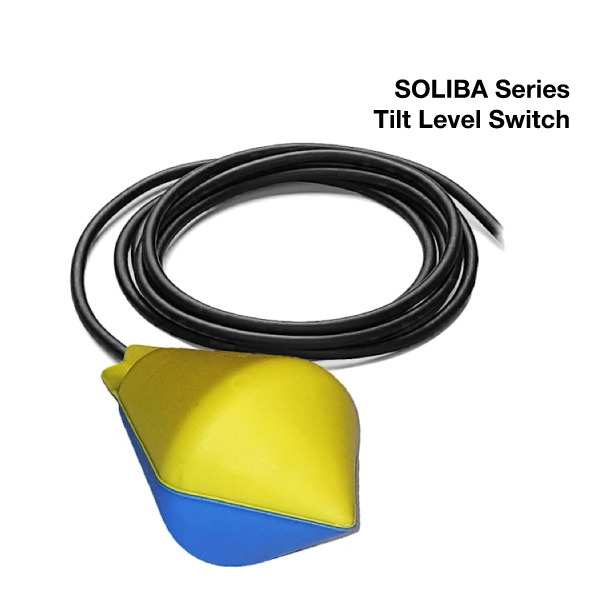


ATMI tilt switches support dependable bulk-solids point detection in storage, transfer and conveying systems where dust and uneven material surfaces challenge other methods.
What is a ATMI Tilt Switch?
The probe is suspended at the target point and operates when surrounding material forces it away from vertical. Different probe constructions and approvals address standard industrial and potentially explosive dust environments.
Model suitability depends on the full duty: what changes physically, how quickly it develops, which output is required and what the machine must do next. Two similar housings may differ in contacts, travel, latching, materials or certificates.
Typical applications
Common duties include powder silos, chute plug alarms, stockpile limits, conveyor transfer points. Each location should be surveyed for material impact, buildup, access, vibration, temperature and exposure before the device and bracket are specified.
- powder silos: verify the actual operating condition, mounting geometry and required response before selecting a model.
- chute plug alarms: verify the actual operating condition, mounting geometry and required response before selecting a model.
- stockpile limits: verify the actual operating condition, mounting geometry and required response before selecting a model.
- conveyor transfer points: verify the actual operating condition, mounting geometry and required response before selecting a model.
How to select the right model
Separate mandatory characteristics from preferences. Contact utilization, positive opening, hazardous-area approval and permitted mechanical travel can be critical, while color or a familiar housing shape normally is not.
Document response time, proof-test method and the person responsible for inspection. These lifecycle requirements often distinguish a maintainable solution from one that is difficult to verify in service.
- Confirm the contact arrangement, utilization category and control voltage.
- Match the enclosure and ingress rating to dust, water, washdown and corrosion exposure.
- Check ambient temperature, cable entry, mounting dimensions and actuator geometry.
- For hazardous areas, verify the complete certificate and marking for the exact model.
Installation and commissioning guidance
Review the manufacturer’s probe orientation and exclusion zones. Avoid locations where normal swinging, vibration or turbulent product flow can repeatedly cross the trip angle.
Protect the unit from routine impact or burial unless it is designed for direct contact. After termination, inspect gaskets and cable entries and record the initial clearance, tension, setpoint or calibration as applicable.
Inspection and lifecycle care
Inspection combines condition and performance. Compare the field setting with the commissioning baseline, operate the device safely and record the input, alarm, trip and reset results under its unique tag.
If the device is damaged or its state is uncertain, replace it with a verified configuration and inspect the target or process condition that caused the damage. Like-for-like replacement alone may reproduce the failure.
Specification, commissioning and lifecycle record
A dependable ATMI tilt switch decision remains traceable from the operating requirement to the installed order code. Record the normal condition, abnormal trigger, required controller state, alarm or stop response, reset rule and inspection method before requesting quotations. This prevents commercial substitutions from changing the engineering function unnoticed.
Keep the approved datasheet, complete model suffix, terminal drawing, mounting sketch, certificates and commissioning result under the equipment tag. After replacement, adjustment, conveyor modification or control-software change, repeat the relevant physical proof test and update the as-built record. The test must demonstrate the field device, wiring, controller indication and final machine response rather than only a changing PLC input.
- Compare complete order codes and option suffixes.
- Confirm contact state under normal, actuated and fault conditions.
- Record the installed clearance, angle, tension, threshold or calibration.
- Inspect mounting, cable entries, seals, earthing and access.
- Set maintenance intervals from risk, environment, duty and failure history.
Frequently asked questions
Can an ATMI tilt switch detect both high and low level?
It can support either point-level function depending on installation and control logic, though the safe failure response must be designed for the application.
Is ATEX approval automatic for every model?
No. Hazardous-area suitability applies only to exact certified variants and markings; verify the certificate, zone, dust group and temperature information.
Selection note: verify dimensions, operating principle, electrical data, environmental rating and certifications on the current datasheet for the exact ordered model.
What is Atmi Tilt Switch?
Atmi Tilt Switch is a device used for measuring the tilt of an object in multiple axes with reference to an absolute level plane. They are small and compact instruments which make them a viable option for many applications where orientation or inclination detection is a key factor, such as warning systems on construction or agricultural vehicles. Alongside our vast range of inclinometers and inclinometer sensors, our tilt-switches at Level Developments also use highly accurate sensors to operate, gaining an advantage over alternatives such as mercury switches or rolling ball mechanisms.
Tilt sensors work by detecting changes in angle from a pre-set “zero” state. They are set with a maximum and minimum threshold in which the application will work or be safe to operate based on the specific application’s needs. If the tilt or inclination exceeds these threshold values in either direction, a relay will be engaged and the switch closed, thus sending an operation to an external device such as an alarm or warning light to indicate unsafe or non-working conditions.
This ATEX certified tilt level switch (CertificationATEX II 1 D Ex ia IIC T6) has been designed to provide high level measurement in silos or any other type of storage containers located in hazardous areas 20, 21, 22 (dust).
Its operation is very simple: Vertically suspended at the desired high level point, the SOLIBA EX P will tilt as the grain reaches the unit.
To secure your facilities at a minimum cost, the installation of a SOLIBA EX P high level mechanical tilt level switch is strongly recommended, even if your facilities are already equipped with other types of equipment such as: rotating paddles, vibrating forks, radars, capacitive and ultrasonic sensors, etc.
The SOLIBA EX P tilt level switch only operates when the high level is reached, unlike other types of level measurement devices that operate permanently
The tilt level switch must be installed at the opposite side of the arrival of grain and at a certain distance from the silo walls. This to ensure an optimal tilting operation.
This model is also available in a GP version (Gas & Dust). Please see SOLIBA EX GP ATEX certified
This tilt level switch has been designed to provide high level measurement in silos or any other type of storage containers located in non-hazardous areas.
Its operation is very simple: Vertically suspended at the desired high level point, the SOLIBA will tilt as the grain reaches the unit.
To secure your facilities at a minimum cost, the installation of a SOLIBA high level mechanical tilt level switch is strongly recommended, even if your facilities are already equipped with other types of equipment such as: rotating paddles, vibrating forks, radars, capacitive and ultrasonic sensors, etc.
The SOLIBA tilt level switch only operates when the high level is reached, unlike other types of level measurement devices that operate permanently
The tilt level switch must be installed at the opposite side of the arrival of grain and at a certain distance from the silo walls. This to ensure an optimal tilting operation.
| Brand | New Order Code | Old Order Code | Product Name | For Use With | Cable Length | Hazardous Areas | Housing (Body) | Application | Certificate |
| Atmi | SOLIBA5M | SOLIBA 5M | SOLIBA Series Tilt Level Switch | Solid | 5 meters | Non-Hazardous Areas | Copolymer Polypropylene Body | Standard | None |
| Atmi | SOLIBA6M | SOLIBA 6M | SOLIBA Series Tilt Level Switch | Solid | 6 meters | Non-Hazardous Areas | Copolymer Polypropylene Body | Standard | None |
| Atmi | SOLIBA10M | SOLIBA 10M | SOLIBA Series Tilt Level Switch | Solid | 10 meters | Non-Hazardous Areas | Copolymer Polypropylene Body | Standard | None |
| Atmi | SOLIBA13M | SOLIBA 13M | SOLIBA Series Tilt Level Switch | Solid | 13 meters | Non-Hazardous Areas | Copolymer Polypropylene Body | Standard | None |
| Atmi | SOLIBA15M | SOLIBA 15M | SOLIBA Series Tilt Level Switch | Solid | 15 meters | Non-Hazardous Areas | Copolymer Polypropylene Body | Standard | None |
| Atmi | SOLIBA20M | SOLIBA 20M | SOLIBA Series Tilt Level Switch | Solid | 20 meters | Non-Hazardous Areas | Copolymer Polypropylene Body | Standard | None |
| Atmi | SOLIBA30M | SOLIBA 30M | SOLIBA Series Tilt Level Switch | Solid | 30 meters | Non-Hazardous Areas | Copolymer Polypropylene Body | Standard | None |
| Atmi | SOLIBAEXP5M | SOLIBA EX-P 5M | SOLIBA EX Series Tilt Level Switch | Solid | 5 meters | 20, 21, 22 (dust) | Copolymer Polypropylene + HR HY Body | Ex-Proof | Atex |
| Atmi | SOLIBAEXP10M | SOLIBA EX-P 10M | SOLIBA EX Series Tilt Level Switch | Solid | 10 meters | 20, 21, 22 (dust) | Copolymer Polypropylene + HR HY Body | Ex-Proof | Atex |
| Atmi | SOLIBAEXP15M | SOLIBA EX-P 15M | SOLIBA EX Series Tilt Level Switch | Solid | 15 meters | 20, 21, 22 (dust) | Copolymer Polypropylene + HR HY Body | Ex-Proof | Atex |
| Atmi | SOLIBAEXP20M | SOLIBA EX-P 20M | SOLIBA EX Series Tilt Level Switch | Solid | 20 meters | 20, 21, 22 (dust) | Copolymer Polypropylene + HR HY Body | Ex-Proof | Atex |
| Atmi | SOLIBAEXP25M | SOLIBA EX-P 25M | SOLIBA EX Series Tilt Level Switch | Solid | 25 meters | 20, 21, 22 (dust) | Copolymer Polypropylene + HR HY Body | Ex-Proof | Atex |
| Atmi | SOLIBAEXP30M | SOLIBA EX-P 30M | SOLIBA EX Series Tilt Level Switch | Solid | 30 meters | 20, 21, 22 (dust) | Copolymer Polypropylene + HR HY Body | Ex-Proof | Atex |
| Atmi | SOLIBAEXGP5M | SOLIBA EX-GP 5M | SOLIBA EX Series Tilt Level Switch | Solid | 5 meters | 0, 1,2 (Gas) 20, 21, 22 (dust) | Copolymer Polypropylene + HR HY Body | Ex-Proof | Atex |
| Atmi | SOLIBAEXGP10M | SOLIBA EX-GP 10M | SOLIBA EX Series Tilt Level Switch | Solid | 10 meters | 0, 1,2 (Gas) 20, 21, 22 (dust) | Copolymer Polypropylene + HR HY Body | Ex-Proof | Atex |
| Atmi | SOLIBAEXGP15M | SOLIBA EX-GP 15M | SOLIBA EX Series Tilt Level Switch | Solid | 15 meters | 0, 1,2 (Gas) 20, 21, 22 (dust) | Copolymer Polypropylene + HR HY Body | Ex-Proof | Atex |
| Atmi | SOLIBAEXGP20M | SOLIBA EX-GP 20M | SOLIBA EX Series Tilt Level Switch | Solid | 20 meters | 0, 1,2 (Gas) 20, 21, 22 (dust) | Copolymer Polypropylene + HR HY Body | Ex-Proof | Atex |
| Atmi | SOLIBAEXGP25M | SOLIBA EX-GP 25M | SOLIBA EX Series Tilt Level Switch | Solid | 25 meters | 0, 1,2 (Gas) 20, 21, 22 (dust) | Copolymer Polypropylene + HR HY Body | Ex-Proof | Atex |
| Atmi | SOLIBAEXGP30M | SOLIBA EX-GP 30M | SOLIBA EX Series Tilt Level Switch | Solid | 30 meters | 0, 1,2 (Gas) 20, 21, 22 (dust) | Copolymer Polypropylene + HR HY Body | Ex-Proof | Atex |