

Pull Rope Emergency Switch
These products are used to increase safety in the machine and conveyor line. In the plant, the system stops when the staff pulls the rope around the machine or at any point in a conveyor. These products are also called Pull Rope Emergency Switch, Pull Rope Switch
Showing 1–24 of 291 results
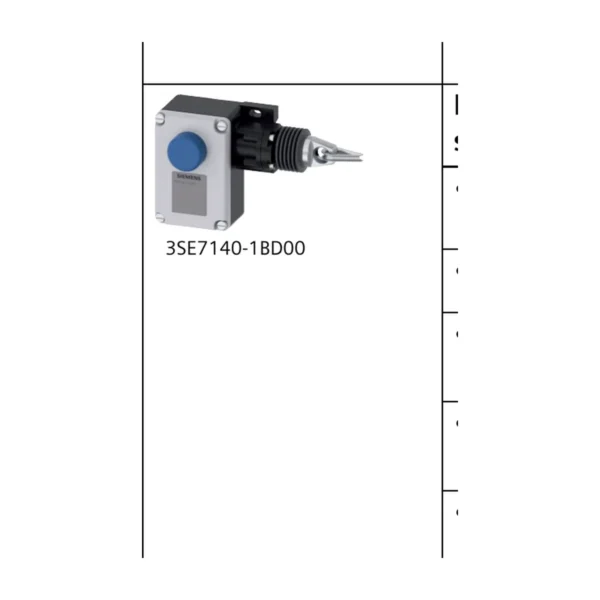
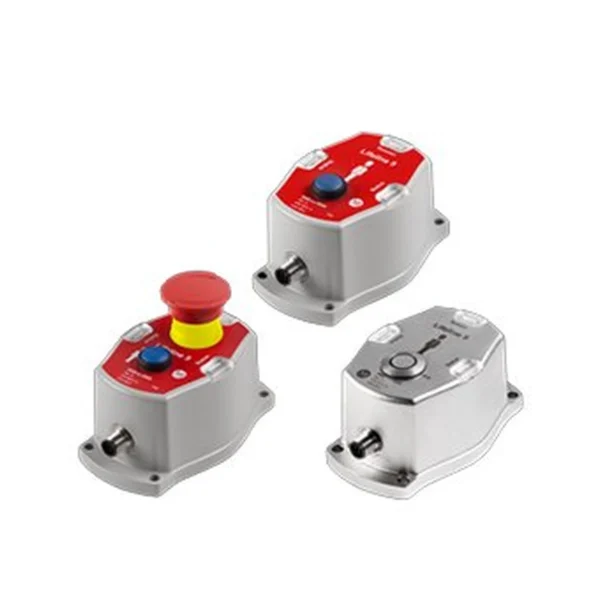


Pull rope emergency switches make a conveyor stop command accessible along a continuous operating area rather than only at isolated pushbuttons.
What is a Pull Rope Emergency Switch?
Pulling the tensioned rope operates and usually latches the switch. Many systems also detect rope breakage or loss of tension. Positively operated contacts feed a safety or control circuit, and manual reset prevents an automatic restart after actuation.
A switch or sensor does not create safety integrity by itself. Its failure behavior, wiring, logic and final control element must be considered together and verified against the performance required by the application.
Typical applications
Relevant installations include long belt conveyors, sorting lines, mining conveyors, packaging and production lines. Actual operating observations are valuable: drawings rarely show wind, carryback, washdown, structural movement or the way bulk material strikes a device.
- long belt conveyors: verify the actual operating condition, mounting geometry and required response before selecting a model.
- sorting lines: verify the actual operating condition, mounting geometry and required response before selecting a model.
- mining conveyors: verify the actual operating condition, mounting geometry and required response before selecting a model.
- packaging and production lines: verify the actual operating condition, mounting geometry and required response before selecting a model.
How to select the right model
Begin with the required process or protective function, then work outward through mechanics, electrical characteristics and environment. Do not assume that products with similar dimensions are interchangeable; actuator movement and contact action can change the control result.
Include spare strategy and obsolescence handling in the selection. A physically compatible spare is only useful when its contacts, settings, materials and approvals also reproduce the required function.
- Confirm the contact arrangement, utilization category and control voltage.
- Match the enclosure and ingress rating to dust, water, washdown and corrosion exposure.
- Check ambient temperature, cable entry, mounting dimensions and actuator geometry.
- For hazardous areas, verify the complete certificate and marking for the exact model.
Installation and commissioning guidance
Engineer the switch, rope, supports, tensioner, turnbuckles and end springs as one system. Set rope tension and support spacing for the installed length and temperature range, then test access and operation from multiple points.
Verify orientation, target alignment, fasteners, cable route and maintenance access before energization. Commission mechanical response first, followed by terminals, controller indication, alarm or trip and the deliberate restart sequence.
Inspection and lifecycle care
After replacement or adjustment, repeat the relevant acceptance test and update the as-built record. A closed work order should identify the failure cause, not only the part that was changed.
Any temporary bypass should be authorized, visible and time-limited under site procedure. The repair and subsequent proof test must be completed before the bypass is removed from the management record.
Specification, commissioning and lifecycle record
A dependable pull rope emergency switch decision remains traceable from the operating requirement to the installed order code. Record the normal condition, abnormal trigger, required controller state, alarm or stop response, reset rule and inspection method before requesting quotations. This prevents commercial substitutions from changing the engineering function unnoticed.
Keep the approved datasheet, complete model suffix, terminal drawing, mounting sketch, certificates and commissioning result under the equipment tag. After replacement, adjustment, conveyor modification or control-software change, repeat the relevant physical proof test and update the as-built record. The test must demonstrate the field device, wiring, controller indication and final machine response rather than only a changing PLC input.
- Compare complete order codes and option suffixes.
- Confirm contact state under normal, actuated and fault conditions.
- Record the installed clearance, angle, tension, threshold or calibration.
- Inspect mounting, cable entries, seals, earthing and access.
- Set maintenance intervals from risk, environment, duty and failure history.
Frequently asked questions
How far apart should pull rope switches be installed?
Maximum rope span, support spacing and tension are model-specific. Use the manufacturer’s system design values and the applicable conveyor standard.
Should pulling or breaking the rope stop the conveyor?
A properly selected tensioned system can detect both conditions, providing fault awareness as well as emergency actuation.
Selection note: verify dimensions, operating principle, electrical data, environmental rating and certifications on the current datasheet for the exact ordered model.
These products are used to increase safety in the machine and conveyor line. In the plant, the system stops when the staff pulls the rope around the machine or at any point in a conveyor. These products are also called Pull Rope Emergency Switch, Pull Rope Switch
Pull Rope Emergency Switch are used on conveyor systems as conveyor belt safety accessory designed to check and shut down.
What is a Pull Rope Emergency Switch?
A pull rope emergency switch is an emergency stop device that is used to quickly shut down machinery in case of an emergency. The switch is designed to be activated by pulling on a rope or cable, which is connected to the switch. When the rope or cable is pulled, the switch is triggered, and the machinery is shut down. This allows workers to quickly stop the machinery in case of an emergency, preventing accidents and injuries.
Features and Functions of Pull Rope Emergency Switch
The pull rope emergency switch comes with a range of features that make it a reliable and effective safety device. Some of the key features and functions of the switch include:
- High visibility: The switch is designed to be highly visible, making it easy for workers to locate it in case of an emergency.
- Quick activation: The switch is designed to be activated quickly, allowing workers to shut down machinery in a matter of seconds.
- Robust construction: The switch is constructed from high-quality materials, making it durable and resistant to wear and tear.
- Easy to install: The switch is designed to be easy to install, and it can be mounted in a variety of positions.
- Suitable for harsh environments: The switch is designed to function in harsh industrial environments, including those that are wet, dusty, or corrosive.
Benefits of Using Pull Rope Emergency Switch
The use of pull rope emergency switch offers a range of benefits, including:
- Improved safety: The switch improves safety in industrial environments, preventing accidents and injuries.
- Compliance with regulations: The use of pull rope emergency switches is required by various safety regulations, including OSHA regulations in the United States.
- Cost-effective: The switch is a cost-effective safety device, providing an affordable way to improve safety in industrial environments.
- Easy to use: The switch is easy to use, allowing workers to quickly shut down machinery in case of an emergency.
- Flexibility: The switch is flexible and can be used with a range of machinery, making it a versatile safety device.
The pull rope emergency switch is a critical safety device that is used in industrial environments to prevent accidents and injuries. The switch is designed to be highly visible, quick to activate, and suitable for harsh industrial environments. Its use provides a range of benefits, including improved safety, compliance with regulations, cost-effectiveness, ease of use, and flexibility. Industrial operators and workers should ensure that pull rope emergency switches are installed and maintained properly to ensure optimal safety in their work environments.