

Belt Tear Switch
Belt tear switches help detect a developing longitudinal rip or material penetration so a conveyor can stop before damage propagates.
Showing all 10 results

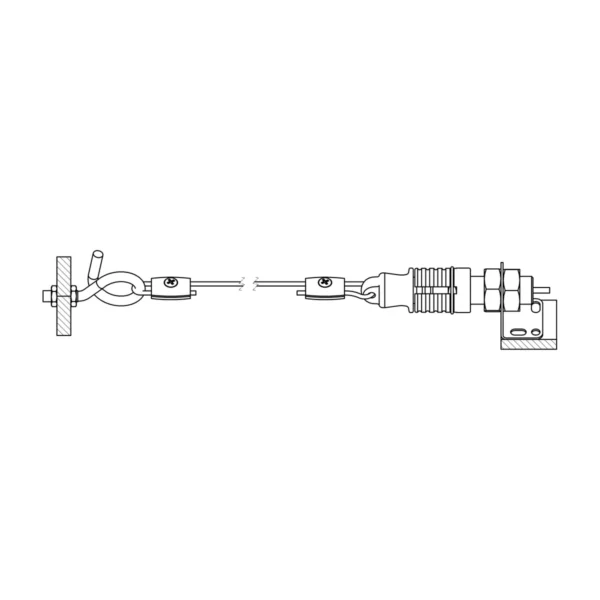


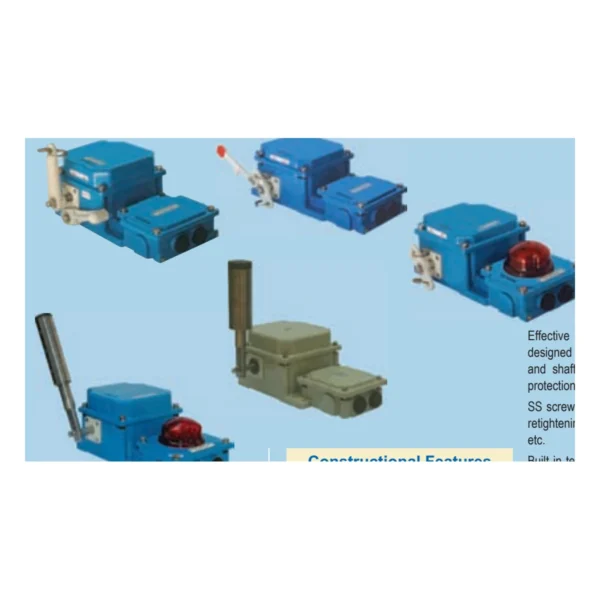
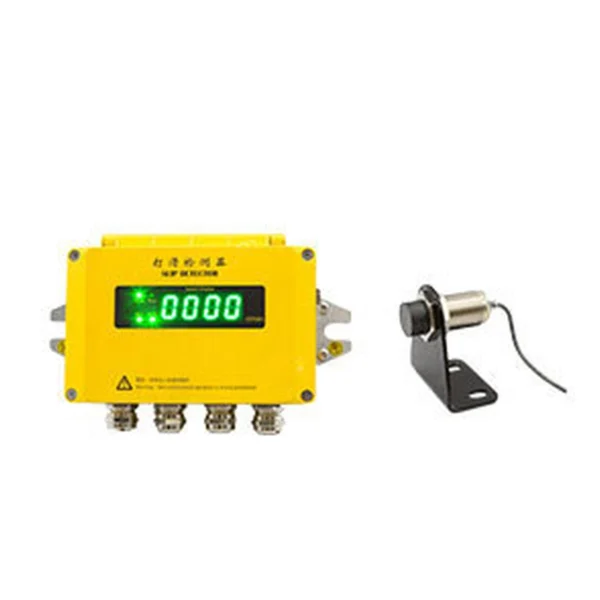
Belt tear switches help detect a developing longitudinal rip or material penetration so a conveyor can stop before damage propagates.
What is a Belt Tear Switch?
Detection methods vary. A physical sensing loop, cable or device beneath the belt can be displaced by a hanging belt flap or foreign object. Other systems use dedicated rip-detection loops or non-contact monitoring. The chosen method must match the conveyor and expected failure mode.
Before comparing models, define normal operation and the abnormal state that must be detected. The selected mechanism, electrical output and diagnostic behavior should make that distinction repeatable across load, temperature and expected process variation.
Typical applications
Typical uses span loading zones, transfer chutes, high-value belts, sharp bulk materials. Record the process condition and consequence at every tag because the same product family may serve indication in one area and equipment protection in another.
- loading zones: verify the actual operating condition, mounting geometry and required response before selecting a model.
- transfer chutes: verify the actual operating condition, mounting geometry and required response before selecting a model.
- high-value belts: verify the actual operating condition, mounting geometry and required response before selecting a model.
- sharp bulk materials: verify the actual operating condition, mounting geometry and required response before selecting a model.
How to select the right model
For a new application, specify geometry and response from the conveyor design. For a replacement, capture the complete old code, terminals, actuator and mounting before removal, then verify any proposed successor against the original function.
Document response time, proof-test method and the person responsible for inspection. These lifecycle requirements often distinguish a maintainable solution from one that is difficult to verify in service.
- Confirm the contact arrangement, utilization category and control voltage.
- Match the enclosure and ingress rating to dust, water, washdown and corrosion exposure.
- Check ambient temperature, cable entry, mounting dimensions and actuator geometry.
- For hazardous areas, verify the complete certificate and marking for the exact model.
Installation and commissioning guidance
Protect the detector from routine spillage while keeping it able to respond to a genuine torn flap or penetration. Test the full stop function without creating a hazard or damaging the belt.
Protect the unit from routine impact or burial unless it is designed for direct contact. After termination, inspect gaskets and cable entries and record the initial clearance, tension, setpoint or calibration as applicable.
Inspection and lifecycle care
Trend nuisance operations and slow or failed resets. Increasing event frequency often reveals a process, alignment, contamination or mounting problem before the device loses its function completely.
Use event history to refine inspection and spare plans. A recurring fault at one location may point to loading, vibration, heat or access issues that should be corrected at system level.
Specification, commissioning and lifecycle record
A dependable belt tear switch decision remains traceable from the operating requirement to the installed order code. Record the normal condition, abnormal trigger, required controller state, alarm or stop response, reset rule and inspection method before requesting quotations. This prevents commercial substitutions from changing the engineering function unnoticed.
Keep the approved datasheet, complete model suffix, terminal drawing, mounting sketch, certificates and commissioning result under the equipment tag. After replacement, adjustment, conveyor modification or control-software change, repeat the relevant physical proof test and update the as-built record. The test must demonstrate the field device, wiring, controller indication and final machine response rather than only a changing PLC input.
- Compare complete order codes and option suffixes.
- Confirm contact state under normal, actuated and fault conditions.
- Record the installed clearance, angle, tension, threshold or calibration.
- Inspect mounting, cable entries, seals, earthing and access.
- Set maintenance intervals from risk, environment, duty and failure history.
Frequently asked questions
Where are belt tear switches normally installed?
They are often placed near loading and transfer zones where foreign-object penetration and longitudinal ripping are more likely.
Does a tear switch detect every belt defect?
No. It detects the failure mode and area covered by its sensing method; visual inspection and other condition-monitoring methods remain necessary.
Selection note: verify dimensions, operating principle, electrical data, environmental rating and certifications on the current datasheet for the exact ordered model.
The safe operation of a conveyor system is essential for ensuring a smooth and efficient workflow in any industrial setting. However, sometimes accidents can happen, and in the case of a belt tear, the results can be catastrophic. A Belt Tear Switch is a safety device that can prevent such accidents by detecting any damage or tear in the conveyor belt and triggering an emergency shutdown. In this article, we will explore the Belt Tear Switch in detail, including its working principle, types, and installation.
Working Principle
A Belt Tear Switch works on a simple principle - it detects any damage or tear in the conveyor belt and triggers an emergency shutdown. The switch consists of a metal plate that is mounted beneath the conveyor belt. The plate is equipped with two sets of limit switches that are positioned on either side of the plate. When the conveyor belt is in operation, the plate is held in place by the weight of the belt. However, if there is a tear in the belt, the weight of the belt is no longer evenly distributed, causing the plate to tilt to one side. This movement activates the limit switches, which then trigger an emergency shutdown of the conveyor system.
Types of Belt Tear Switch
There are two types of Belt Tear Switches available in the market - Mechanical and Electrical.
-
Mechanical Belt Tear Switch
A Mechanical Belt Tear Switch is a simple and cost-effective safety device that is widely used in conveyor systems. It consists of a metal plate that is mounted beneath the conveyor belt. The plate is equipped with a spring-loaded roller that is positioned at the center of the plate. When the conveyor belt is in operation, the roller is held in place by the weight of the belt. However, if there is a tear in the belt, the weight of the belt is no longer evenly distributed, causing the roller to drop. This movement activates the limit switches, which then trigger an emergency shutdown of the conveyor system.
-
Electrical Belt Tear Switch
An Electrical Belt Tear Switch is a more advanced safety device that is widely used in modern conveyor systems. It consists of a metal plate that is mounted beneath the conveyor belt. The plate is equipped with two sets of limit switches that are positioned on either side of the plate. When the conveyor belt is in operation, the plate is held in place by the weight of the belt. However, if there is a tear in the belt, the weight of the belt is no longer evenly distributed, causing the plate to tilt to one side. This movement activates the limit switches, which then trigger an emergency shutdown of the conveyor system. In addition to this, Electrical Belt Tear Switches also come with additional features such as LED indicators, which provide a visual indication of the switch status.
Installation
The installation of a Belt Tear Switch is critical for ensuring its proper functioning. The switch should be installed at a strategic location on the conveyor system where the belt is most likely to tear. The switch should be mounted in such a way that the metal plate is positioned directly beneath the conveyor belt. The switch should also be positioned in a way that allows for easy access and maintenance.
A Belt Tear Switch is an essential safety device that should be installed in every conveyor system. It plays a critical role in preventing accidents and ensuring the smooth and efficient operation of the conveyor system. When choosing a Belt Tear Switch, it is essential to consider factors such as the type of switch, its features, and its installation requirements. By taking these factors into account, you can ensure that your conveyor system is safe and efficient, and that your employees are protected from harm.