

Relay
Relays to control circuits.
Showing all 3 results
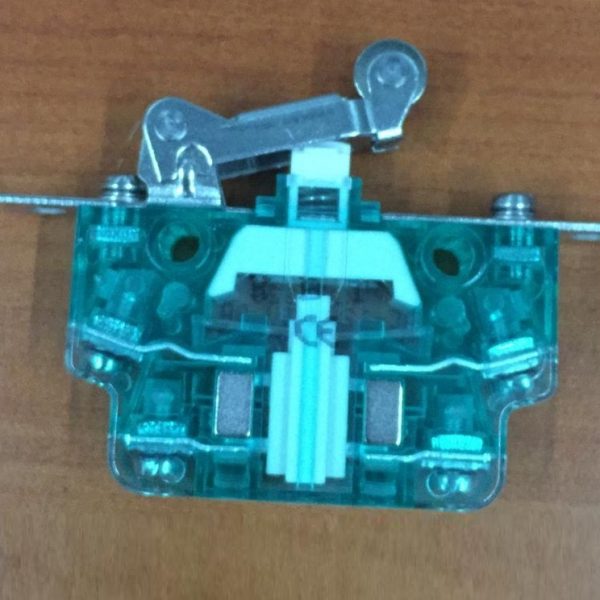


Industrial relays isolate, multiply or change the logic of control signals used by conveyor switches, alarms and interlocks.
What is a Industrial Relay?
A coil or electronic input changes one or more output contacts. Relays can interface different voltages, provide additional contacts and create clear separation between field sensing and control logic, but they do not add safety integrity unless designed and applied for that purpose.
Model suitability depends on the full duty: what changes physically, how quickly it develops, which output is required and what the machine must do next. Two similar housings may differ in contacts, travel, latching, materials or certificates.
Typical applications
Typical uses span conveyor interlocks, alarm annunciation, PLC interfaces, motor-control circuits. Record the process condition and consequence at every tag because the same product family may serve indication in one area and equipment protection in another.
- conveyor interlocks: verify the actual operating condition, mounting geometry and required response before selecting a model.
- alarm annunciation: verify the actual operating condition, mounting geometry and required response before selecting a model.
- PLC interfaces: verify the actual operating condition, mounting geometry and required response before selecting a model.
- motor-control circuits: verify the actual operating condition, mounting geometry and required response before selecting a model.
How to select the right model
For a new application, specify geometry and response from the conveyor design. For a replacement, capture the complete old code, terminals, actuator and mounting before removal, then verify any proposed successor against the original function.
For replacement work, photograph the nameplate and wiring while still legible. For new work, require drawings and certificates with the quotation so configuration suffixes are reviewed before delivery.
- Confirm the contact arrangement, utilization category and control voltage.
- Match the enclosure and ingress rating to dust, water, washdown and corrosion exposure.
- Check ambient temperature, cable entry, mounting dimensions and actuator geometry.
- For hazardous areas, verify the complete certificate and marking for the exact model.
Installation and commissioning guidance
Use a socket, enclosure and wire protection suited to the panel environment. Label channels clearly and test both normal and de-energized behavior.
Set the device only after the conveyor or process is in a correct baseline condition. A protection switch should detect abnormal operation, not compensate continuously for misalignment, unstable loading or poor chute geometry.
Inspection and lifecycle care
Trend nuisance operations and slow or failed resets. Increasing event frequency often reveals a process, alignment, contamination or mounting problem before the device loses its function completely.
If the device is damaged or its state is uncertain, replace it with a verified configuration and inspect the target or process condition that caused the damage. Like-for-like replacement alone may reproduce the failure.
Specification, commissioning and lifecycle record
A dependable industrial control relay decision remains traceable from the operating requirement to the installed order code. Record the normal condition, abnormal trigger, required controller state, alarm or stop response, reset rule and inspection method before requesting quotations. This prevents commercial substitutions from changing the engineering function unnoticed.
Keep the approved datasheet, complete model suffix, terminal drawing, mounting sketch, certificates and commissioning result under the equipment tag. After replacement, adjustment, conveyor modification or control-software change, repeat the relevant physical proof test and update the as-built record. The test must demonstrate the field device, wiring, controller indication and final machine response rather than only a changing PLC input.
- Compare complete order codes and option suffixes.
- Confirm contact state under normal, actuated and fault conditions.
- Record the installed clearance, angle, tension, threshold or calibration.
- Inspect mounting, cable entries, seals, earthing and access.
- Set maintenance intervals from risk, environment, duty and failure history.
Frequently asked questions
Should a standard relay be used in an emergency-stop circuit?
Only components and architecture suitable for the required safety function should be used. A standard control relay is not automatically a safety relay.
Why use interposing relays with field switches?
They can isolate circuits, provide extra contacts and adapt voltage or current requirements between the field device and controller.
Selection note: verify dimensions, operating principle, electrical data, environmental rating and certifications on the current datasheet for the exact ordered model.