

Belt Damage Detector
It is used to control the damage of the belt in the conveyor system. It is called as belt damage detector. Double mounting is made to the bottom of the conveyor belt system. If the band is damaged, the rope is moved and the contacts are enabled.
Showing all 10 results

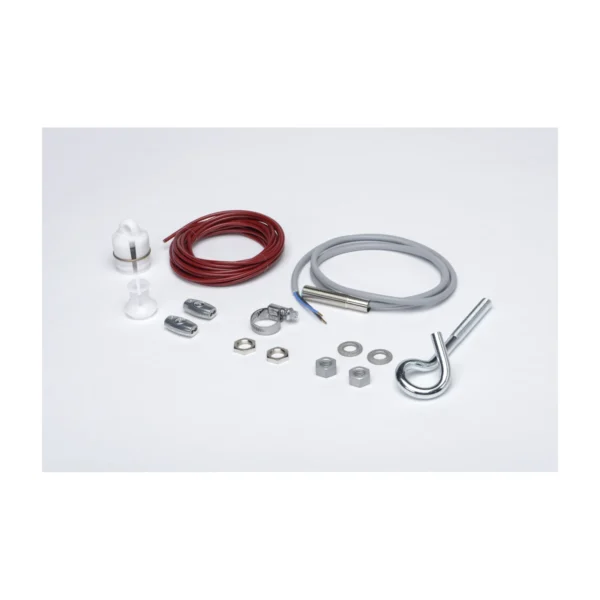
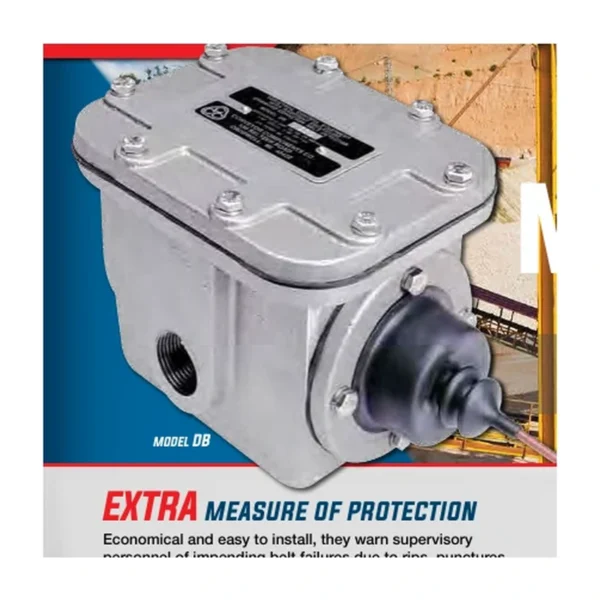


Belt damage detectors identify physical conditions that indicate a torn, protruding or otherwise damaged conveyor belt.
What is a Belt Damage Detector?
A damaged belt flap, wire, object or displaced component contacts a sensing cable or actuator and changes the detector state. More advanced systems may use imaging, inductive loops or other technologies. Each method covers particular defect types and locations.
A complete installation is selected by function rather than product name. Mechanical action, contact behavior, reset method and environmental capability must match the monitored hazard or process condition, while the control circuit determines whether the signal becomes an indication, alarm, interlock or stop.
Typical applications
Relevant installations include critical transfer points, steel-cord belts, mining conveyors, high-throughput terminals. Actual operating observations are valuable: drawings rarely show wind, carryback, washdown, structural movement or the way bulk material strikes a device.
- critical transfer points: verify the actual operating condition, mounting geometry and required response before selecting a model.
- steel-cord belts: verify the actual operating condition, mounting geometry and required response before selecting a model.
- mining conveyors: verify the actual operating condition, mounting geometry and required response before selecting a model.
- high-throughput terminals: verify the actual operating condition, mounting geometry and required response before selecting a model.
How to select the right model
Begin with the required process or protective function, then work outward through mechanics, electrical characteristics and environment. Do not assume that products with similar dimensions are interchangeable; actuator movement and contact action can change the control result.
Include spare strategy and obsolescence handling in the selection. A physically compatible spare is only useful when its contacts, settings, materials and approvals also reproduce the required function.
- Confirm the contact arrangement, utilization category and control voltage.
- Match the enclosure and ingress rating to dust, water, washdown and corrosion exposure.
- Check ambient temperature, cable entry, mounting dimensions and actuator geometry.
- For hazardous areas, verify the complete certificate and marking for the exact model.
Installation and commissioning guidance
Install the detector where a damaged section will interact with the sensor but normal belt sag and spillage will not. Ensure the device can be inspected and reset without entering an unsafe area.
Verify orientation, target alignment, fasteners, cable route and maintenance access before energization. Commission mechanical response first, followed by terminals, controller indication, alarm or trip and the deliberate restart sequence.
Inspection and lifecycle care
Inspection combines condition and performance. Compare the field setting with the commissioning baseline, operate the device safely and record the input, alarm, trip and reset results under its unique tag.
Use event history to refine inspection and spare plans. A recurring fault at one location may point to loading, vibration, heat or access issues that should be corrected at system level.
Specification, commissioning and lifecycle record
A dependable conveyor belt damage detector decision remains traceable from the operating requirement to the installed order code. Record the normal condition, abnormal trigger, required controller state, alarm or stop response, reset rule and inspection method before requesting quotations. This prevents commercial substitutions from changing the engineering function unnoticed.
Keep the approved datasheet, complete model suffix, terminal drawing, mounting sketch, certificates and commissioning result under the equipment tag. After replacement, adjustment, conveyor modification or control-software change, repeat the relevant physical proof test and update the as-built record. The test must demonstrate the field device, wiring, controller indication and final machine response rather than only a changing PLC input.
- Compare complete order codes and option suffixes.
- Confirm contact state under normal, actuated and fault conditions.
- Record the installed clearance, angle, tension, threshold or calibration.
- Inspect mounting, cable entries, seals, earthing and access.
- Set maintenance intervals from risk, environment, duty and failure history.
Frequently asked questions
How is a belt damage detector different from a sway switch?
A damage detector responds to physical belt defects or protrusions; a sway switch responds to lateral tracking deviation.
Should the detector stop the conveyor immediately?
The response should follow the risk and damage assessment. A fast stop can limit propagation, but stopping dynamics and downstream effects must be considered.
Selection note: verify dimensions, operating principle, electrical data, environmental rating and certifications on the current datasheet for the exact ordered model.