

Tilt Switch
Tilt Switch is a device used for measuring the tilt of an object in multiple axes with reference to an absolute level plane. Tilt switches are compact instruments suited to applications where orientation or inclination detection is important, including bulk material level and blockage detection as well as warning systems on mobile or industrial machinery.
Showing 1–24 of 166 results

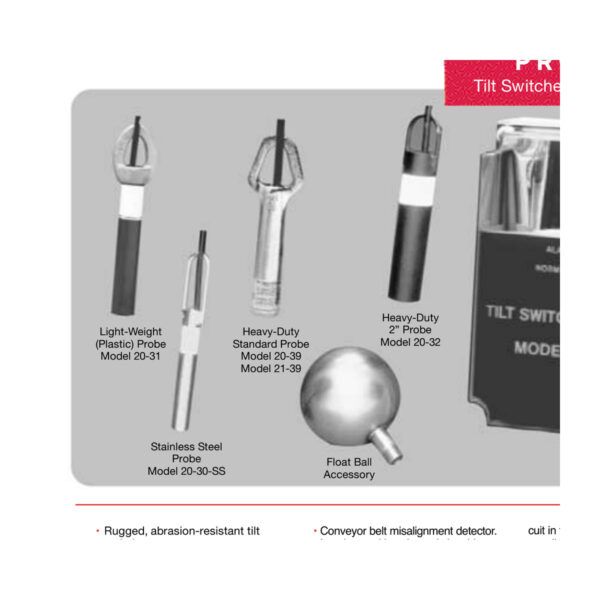

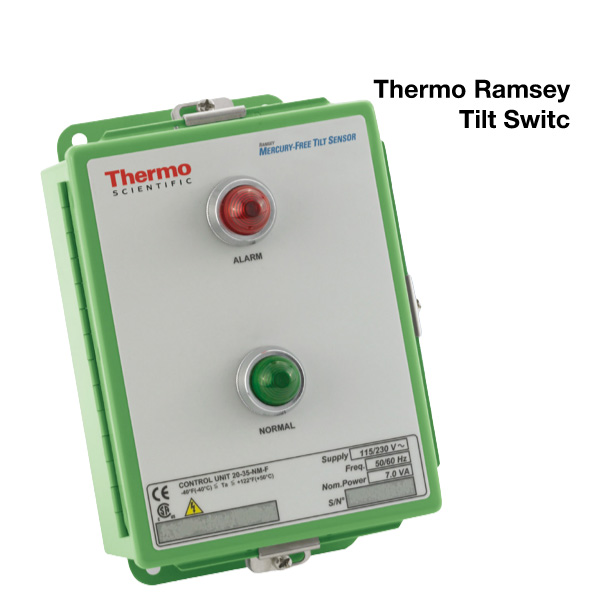


Tilt switches detect a change from the normal orientation of a suspended probe or moving machine component and convert that movement into a control signal.
What is a Tilt Switch?
Bulk-solids probes tilt when material surrounds or pushes them, while machinery tilt sensors respond to angular movement relative to a reference. The selected principle must match whether the duty is level, blockage, position or stability monitoring.
Before comparing models, define normal operation and the abnormal state that must be detected. The selected mechanism, electrical output and diagnostic behavior should make that distinction repeatable across load, temperature and expected process variation.
Typical applications
This product type is frequently considered for high-level alarms in silos, plugged chutes and transfer points, stockpiles and open bins, vehicle and machine inclination monitoring. Selection should reflect both the intended signal and the practical ability to inspect, test and replace the installed unit safely.
- high-level alarms in silos: verify the actual operating condition, mounting geometry and required response before selecting a model.
- plugged chutes and transfer points: verify the actual operating condition, mounting geometry and required response before selecting a model.
- stockpiles and open bins: verify the actual operating condition, mounting geometry and required response before selecting a model.
- vehicle and machine inclination monitoring: verify the actual operating condition, mounting geometry and required response before selecting a model.
How to select the right model
Selection should include the failure modes the system must reveal. Consider open or shorted wiring, seized movement, lost target, buildup and loss of supply alongside the normal actuation condition.
Create an equipment record containing the full model code, approved datasheet, terminal plan and selected settings. This makes quotations comparable and preserves the engineering basis for later replacement.
- operating principle and measurable switching point
- contact arrangement, utilization category and control voltage
- actuator or sensing-element geometry
- enclosure, materials, temperature and cable entry
- hazardous-area or machinery-safety certification where required
- mounting, access, proof testing and replacement traceability
Installation and commissioning guidance
Suspend or mount the device at a representative point, protect cable and probe from damaging impact, and confirm that normal vibration or material movement does not create false operation. Test the full alarm or trip response.
Set the device only after the conveyor or process is in a correct baseline condition. A protection switch should detect abnormal operation, not compensate continuously for misalignment, unstable loading or poor chute geometry.
Inspection and lifecycle care
Trend nuisance operations and slow or failed resets. Increasing event frequency often reveals a process, alignment, contamination or mounting problem before the device loses its function completely.
Use event history to refine inspection and spare plans. A recurring fault at one location may point to loading, vibration, heat or access issues that should be corrected at system level.
Specification, commissioning and lifecycle record
A dependable tilt switch decision remains traceable from the operating requirement to the installed order code. Record the normal condition, abnormal trigger, required controller state, alarm or stop response, reset rule and inspection method before requesting quotations. This prevents commercial substitutions from changing the engineering function unnoticed.
Keep the approved datasheet, complete model suffix, terminal drawing, mounting sketch, certificates and commissioning result under the equipment tag. After replacement, adjustment, conveyor modification or control-software change, repeat the relevant physical proof test and update the as-built record. The test must demonstrate the field device, wiring, controller indication and final machine response rather than only a changing PLC input.
- Compare complete order codes and option suffixes.
- Confirm contact state under normal, actuated and fault conditions.
- Record the installed clearance, angle, tension, threshold or calibration.
- Inspect mounting, cable entries, seals, earthing and access.
- Set maintenance intervals from risk, environment, duty and failure history.
Frequently asked questions
What is a tilt switch used for in bulk handling?
Common duties include high-level detection, plugged-chute alarms, stockpile control and material-presence indication.
Is every tilt switch suitable for hazardous dust?
No. The complete model, controller, wiring and installation must carry the certification required for the classified location.
Selection note: verify dimensions, operating principle, electrical data, environmental rating and certifications on the current datasheet for the exact ordered model.