

Blog
Plugged Chute Switch Selection and Installation Guide

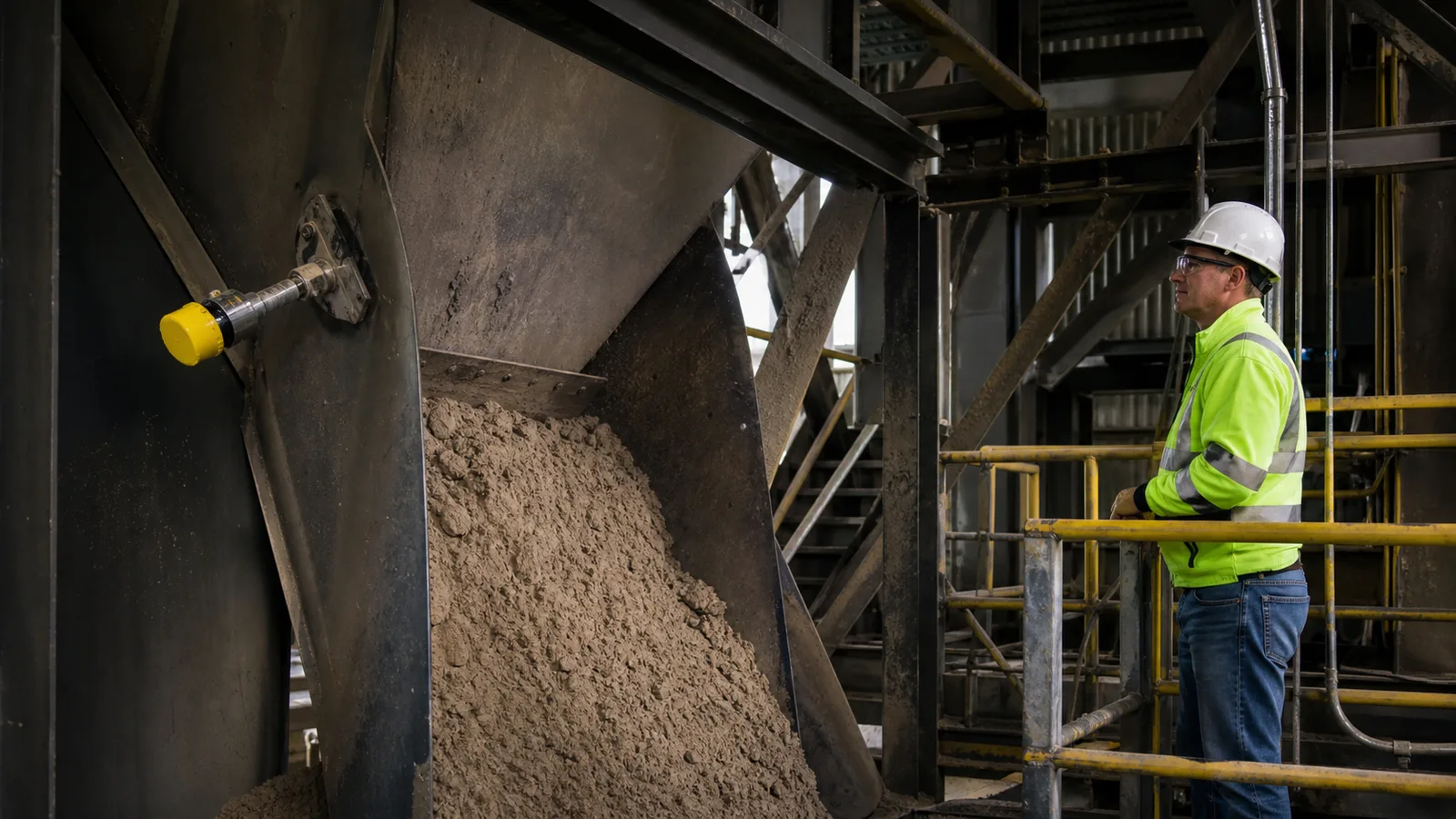
This practical guide examines plugged chute switch from an engineering, installation and lifecycle perspective.
A plugged-chute switch must detect accumulating material early enough to stop upstream flow, yet ignore ordinary contact created by a healthy transfer.
Key takeaways
- Start with the blockage mechanism and material, not a preferred sensor.
- Locate detection above the damaging pressure or overflow point.
- Coordinate the trip with upstream feeders and conveyor sequence.
Why transfer chutes plug
Wet cohesive material can bridge, oversized lumps can lodge at a restriction, liners can detach and poor chute geometry can slow the stream. A downstream conveyor stoppage can also back material into the chute. The detector needs to see the resulting accumulation, not simply normal burden contact.
Tilt probes, pressure diaphragms, capacitance or microwave devices and other point sensors can provide blockage indication. Mechanical methods tolerate heavy dust but need material force and movement; non-contact methods avoid moving parts but depend on material properties and installation geometry.
Application survey
Review the chute during multiple operating states and speak with operators who have cleared previous plugs.
- Identify the restriction or backup point and the maximum safe accumulation height.
- Record material size, moisture, density, temperature, abrasiveness and coating behavior.
- Estimate how quickly the chute fills after downstream flow stops.
- Map normal impact zones, dead pockets and safe mounting access.
- Define which upstream machines must stop and in what order.
Technology and mounting choices
A detector on a dead pocket may stay covered without indicating active blockage, while a diaphragm in direct impact may fail prematurely. Redundant or diverse detection can be justified when chute overflow has severe consequences. The switch output should be fail-aware where practicable.
- Tilt probe for direct mechanical accumulation detection.
- Pressure or diaphragm switch where wall pressure reliably rises.
- Capacitance or admittance sensor where material properties and buildup compensation suit.
- Microwave or other non-contact point detection for appropriate geometry.
- Temperature, abrasion, enclosure and hazardous-area requirements.
Frequent design problems
A detector often appears unreliable because process assumptions were wrong. A short site trial or provision for adjustable mounting can reduce this risk.
- Placing the sensor below the point where chute damage begins.
- Using a long delay on a small, fast-filling chute.
- Allowing coating to hold a mechanical or capacitance device active.
- Stopping only the immediate feeder while another source continues loading.
- Providing no safe method to inspect, clean or test the device.
Commissioning with a cause-and-effect test
Test the field device and simulate the logic response without intentionally creating a hazardous blockage. Verify the upstream sequence, alarm text, latching or reset, and restart authorization. After real events, compare detector timing with the physical plug location.
- Record normal exposure and expected trip condition.
- Function-test the complete chain at a risk-based interval.
- Inspect liners and geometry when nuisance trips increase.
- Analyze material or moisture changes associated with each event.
Specification and verification record
For a repeatable plugged chute switch decision, retain the approved datasheet, model code, mounting or calibration values, wiring reference and observed functional-test result under the equipment tag. Related terminology such as chute blockage detector, material flow switch, high level chute alarm can describe adjacent search or purchasing language, but it must not be used to assume that devices with different functions are interchangeable.
- Record the normal state and the exact condition that creates alarm or trip.
- Photograph the final installation and nameplate before contamination reduces legibility.
- Link every setting change or replacement to an authorized work order.
- Repeat the relevant proof test after mechanical, electrical or software modification.
Frequently asked questions
What is the best plugged chute sensor?
There is no universal best type; selection depends on material, buildup, impact, geometry, response time and environment.
Can a tilt switch detect a chute plug?
Yes, when accumulating material reliably deflects a correctly positioned probe.
Should the alarm latch?
Latching can require inspection before restart, but the required behavior must follow the process and risk assessment.
How is the switch tested without plugging the chute?
Use the manufacturer’s mechanical or electrical test provision and verify the downstream logic under a controlled test plan.
Engineering note: Always verify the selected switch, wiring method, stopping function and environmental rating against the manufacturer’s current datasheet, the machine risk assessment and the standards enforced at the installation location.