

Blog
Tilt Switches for Level and Plugged-Chute Detection

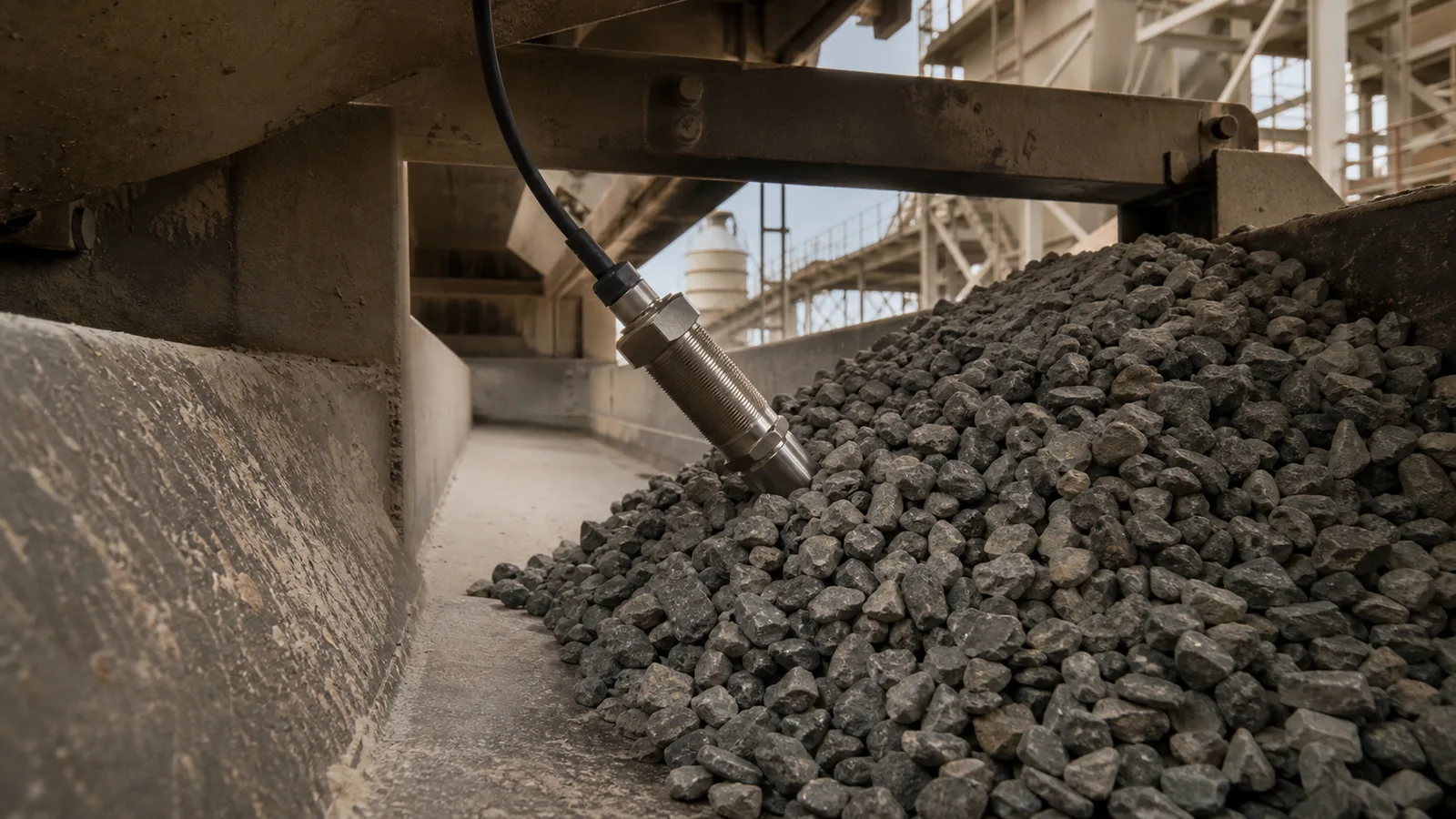
This practical guide examines tilt switch from an engineering, installation and lifecycle perspective.
A tilt switch is a simple point detector: bulk material moves a suspended probe, and the control system turns that physical deflection into an alarm or process action.
Key takeaways
- Probe location determines whether normal flow or a true blockage moves it.
- Material density, abrasion, temperature and buildup influence model selection.
- A tilt switch gives a point condition, not a continuous level measurement.
Tilt-switch operating principle
Dust clouds, irregular material surfaces and low dielectric properties can challenge some sensing methods. A rugged hanging probe responds directly to material contact and can therefore provide straightforward high-level or blocked-chute indication.
As material accumulates, it pushes the probe away from vertical. At the specified angle, an internal mechanism or associated controller changes output. When material clears, the device returns automatically or after the process condition is restored, depending on design and logic.
Choosing the probe location
Observe actual flow paths and the angle of repose. The ideal location is exposed to the abnormal condition but not continuously battered by the normal stream.
- Define the exact level or blockage condition that requires action.
- Map incoming stream, material pile shape and wall buildup.
- Keep the probe clear of ladders, liners and structural steel.
- Provide a suspension point that supports the probe and protects its cable.
- Maintain safe access for inspection or use a remote proof-test method where available.
Material and environment selection
A light powder may need a sensitive or larger-area probe; dense rock can require a heavy abrasion-resistant construction and impact protection. High temperature at a chute may exceed the controller’s limit even when a probe extension survives, so review every component in the sensing chain.
- Bulk density, particle size and flowability.
- Material and ambient temperature.
- Abrasion, corrosion and impact.
- Probe angle, body material, cable length and extensions.
- Controller supply, delay, contacts and hazardous-area approval.
False alarms and missed blockages
Most errors come from the probe experiencing the wrong mechanical condition rather than an electrical fault.
- Normal product flow repeatedly swings the probe.
- A probe sits in a stagnant pocket and never sees the active pile.
- Buildup holds the detector tilted after the chute clears.
- The time delay is long enough to hide a fast-developing plug.
- Falling lumps strike a probe not designed for direct impact.
Testing and maintenance
Safely deflect the probe or use the manufacturer’s test provision and verify input, timer, alarm and feeder stop. Inspect the cable, suspension, seals and freedom of movement. Compare the trip history with actual process events to refine location or delay without masking hazards.
- Record normal and trip state in the control system.
- Confirm upstream feeding stops before overflow develops.
- Inspect for coating, abrasion and impact damage.
- Test after chute-liner, material or flow-rate changes.
Specification and verification record
For a repeatable tilt switch decision, retain the approved datasheet, model code, mounting or calibration values, wiring reference and observed functional-test result under the equipment tag. Related terminology such as plugged chute detector, high level switch, bulk solids level switch can describe adjacent search or purchasing language, but it must not be used to assume that devices with different functions are interchangeable.
- Record the normal state and the exact condition that creates alarm or trip.
- Photograph the final installation and nameplate before contamination reduces legibility.
- Link every setting change or replacement to an authorized work order.
- Repeat the relevant proof test after mechanical, electrical or software modification.
Frequently asked questions
Can a tilt switch measure continuous level?
No. It normally provides one discrete point, such as high level or blocked chute.
Where is a plugged-chute switch installed?
At a location where accumulating material will reliably reach and deflect the probe before the blockage causes unacceptable consequences.
Why use a time delay?
A validated delay can ignore brief flow impacts, but it must remain short enough to detect the true abnormal condition.
Can tilt switches be used in explosive dust?
Only exact probe and controller configurations carrying the required approval and installed under their certificate conditions.
Engineering note: Always verify the selected switch, wiring method, stopping function and environmental rating against the manufacturer’s current datasheet, the machine risk assessment and the standards enforced at the installation location.