

Blog
IP Ratings for Industrial Conveyor Switches Explained

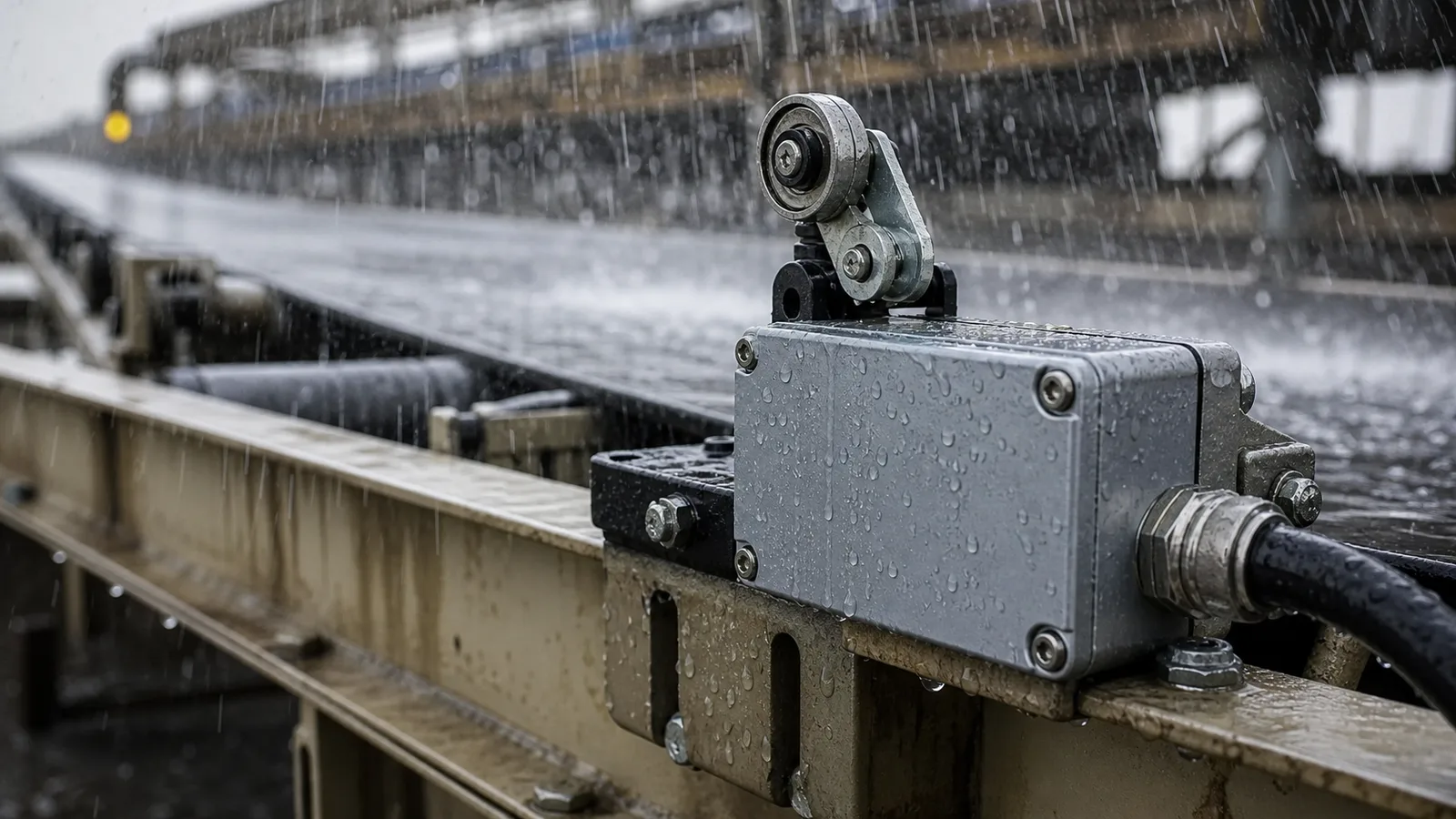
This practical guide examines IP rating industrial switch from an engineering, installation and lifecycle perspective.
An IP code describes tested resistance to solid and water ingress; it does not describe corrosion resistance, impact strength or explosion protection.
Key takeaways
- Read both IP digits and the test context.
- The installed gland and sealing surfaces must preserve the rating.
- Choose for real cleaning and weather exposure, not the highest number alone.
Operating principle and purpose
Conveyor switches face dust, rain, hose cleaning and condensation. The IEC 60529 ingress-protection code uses the first digit for access and solid objects and the second for water. For example, IP66 and IP67 describe different water tests; one is not a universal statement of all environmental durability.
The rating applies to a complete tested enclosure configuration. Open covers, damaged gaskets, incorrect cable entries, unused holes or a mounting orientation outside instructions can invalidate field performance. Corrosive chemicals and UV exposure need separate material evaluation.
Engineering workflow
Convert the application into written requirements before comparing products. A controlled workflow makes technical differences visible and prevents a familiar part number from being applied outside its limits. Include normal and abnormal operating states, who may be exposed, how quickly the condition develops and what the conveyor must do after detection. Mark field locations on a drawing so quotations, installation and later proof tests all refer to the same scope.
- List dust type, rainfall, washdown pressure, cleaning chemicals and possible immersion.
- Define mounting orientation and cable-entry direction.
- Select compatible certified glands, plugs, cable diameter and seals.
- Review temperature, condensation, corrosion and impact separately.
- Inspect installed enclosures after commissioning and cleaning trials.
Selection and design criteria
Avoid specifying IP67 only because the number appears higher than IP66. Temporary immersion performance does not automatically establish resistance to powerful jets, and neither code proves suitability for steam cleaning. Use the exact digits and any supplementary manufacturer tests that match the exposure.
- First digit for access and solid ingress.
- Second digit for the relevant water exposure.
- Gasket, shaft seal and cable-entry construction.
- Housing material and coating for chemical or salt exposure.
- Hazardous-area certificate as a separate requirement.
Common failure modes
Most field problems arise from a mismatch between the device, mechanical interface, environment or control logic. Investigate the whole sensing chain before changing settings. Review recent maintenance, process-rate changes, weather and event history, then compare the physical actuator state with the terminal signal and controller indication. A higher delay or wider trip point may silence the symptom while allowing damage or risk to grow.
- A gland is outside its cable diameter range.
- Unused entries have ordinary plastic plugs.
- Water pools against a shaft or cover joint.
- A cover gasket is pinched after maintenance.
- IP rating is mistaken for ATEX or IECEx approval.
Commissioning and lifecycle verification
Commission the physical device through to the final control action and record the baseline. Inspection frequency should reflect consequence, environment, duty and failure history. Any bypass or failed proof test requires controlled corrective action before normal service. The equipment record should contain the full model code, approved datasheet, mounting photograph, initial settings, normal contact state and cause-and-effect reference. After replacement or adjustment, repeat the relevant acceptance test and confirm that reset restores readiness without issuing an unintended start command.
- Record model, settings, mounting dimensions and terminal state.
- Test the field actuator, input indication, alarm or trip and reset sequence.
- Inspect sealing, cable entry, hardware, actuator freedom and contamination.
- Revalidate after mechanical, electrical, software or process changes.
Specification and verification record
For a repeatable IP rating industrial switch decision, retain the approved datasheet, model code, mounting or calibration values, wiring reference and observed functional-test result under the equipment tag. Related terminology such as IP66 switch, IP67 limit switch, ingress protection conveyor can describe adjacent search or purchasing language, but it must not be used to assume that devices with different functions are interchangeable.
- Record the normal state and the exact condition that creates alarm or trip.
- Photograph the final installation and nameplate before contamination reduces legibility.
- Link every setting change or replacement to an authorized work order.
- Repeat the relevant proof test after mechanical, electrical or software modification.
Frequently asked questions
Is IP67 better than IP66?
They cover different water tests; select the rating that matches jets, immersion or other actual exposure.
Does IP66 mean corrosion resistant?
No. Corrosion depends on materials, coating and chemicals.
Does an IP rating include the cable gland?
Field performance depends on the installed gland and plug system preserving the enclosure rating.
Is IP69K required for washdown?
Only if the defined high-pressure, high-temperature cleaning exposure and project rules call for it.
Engineering note: Always verify the selected switch, wiring method, stopping function and environmental rating against the manufacturer’s current datasheet, the machine risk assessment and the standards enforced at the installation location.