

Blog
Conveyor Belt Preventive Maintenance: A Complete Program

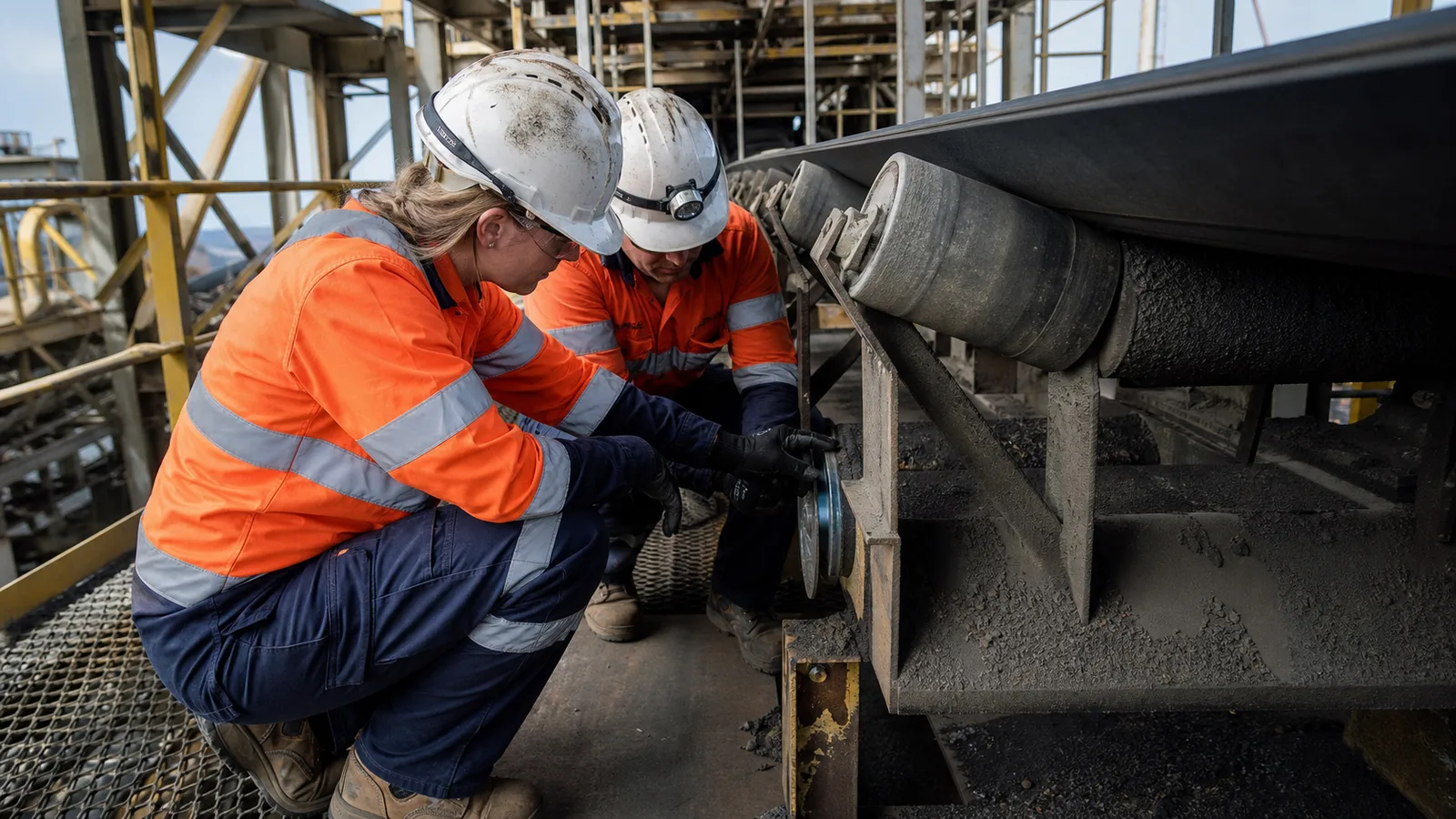
This practical guide examines conveyor belt preventive maintenance from an engineering, installation and lifecycle perspective.
Effective conveyor maintenance combines frequent observation with planned isolation inspections and condition-based corrective work.
Key takeaways
- Rank inspection frequency by conveyor criticality and consequence.
- Use trends, not only fixed calendar tasks.
- Include every protective switch in the asset hierarchy.
Operating principle and purpose
Belts, idlers, pulleys, cleaners, chutes and switches degrade at different rates. A calendar-only program can over-service clean components while missing a rapidly seizing idler or accumulating carryback. Structured operator observations plus planned technical inspections give earlier warning.
The program separates tasks possible from a safe operating position from work that requires isolation. It defines normal reference values, alert limits, ownership and work-order escalation. Failure history then adjusts frequency and spare strategy.
Engineering workflow
Convert the application into written requirements before comparing products. A controlled workflow makes technical differences visible and prevents a familiar part number from being applied outside its limits. Include normal and abnormal operating states, who may be exposed, how quickly the condition develops and what the conveyor must do after detection. Mark field locations on a drawing so quotations, installation and later proof tests all refer to the same scope.
- Create an asset and protection-device register by conveyor station.
- Rank criticality using safety, production and damage consequences.
- Define daily observations, planned shutdown inspections and proof tests.
- Record measurable condition such as temperature, vibration, belt position and take-up travel.
- Review repeat defects and optimize intervals quarterly or after major events.
Selection and design criteria
Maintenance should preserve the designed mechanical geometry and safety function. Record alignment reference points, switch clearances and speed settings before intervention. Coordinate chute, cleaner and belt work because a change in one area often affects tracking and loading elsewhere.
- Belt cover, edges, splice and tension.
- Idler rotation, temperature, noise and frame alignment.
- Pulley lagging, buildup, bearing and shaft condition.
- Cleaner, skirt, chute liner and housekeeping condition.
- Pull rope, sway, speed, tear and position switch function.
Common failure modes
Most field problems arise from a mismatch between the device, mechanical interface, environment or control logic. Investigate the whole sensing chain before changing settings. Review recent maintenance, process-rate changes, weather and event history, then compare the physical actuator state with the terminal signal and controller indication. A higher delay or wider trip point may silence the symptom while allowing damage or risk to grow.
- Lubrication tasks exist but safety-device tests do not.
- Nuisance trips are closed without root-cause work.
- Inspection findings lack precise station numbers.
- Temporary brackets or bypasses become permanent.
- No post-maintenance functional test is required.
Commissioning and lifecycle verification
Commission the physical device through to the final control action and record the baseline. Inspection frequency should reflect consequence, environment, duty and failure history. Any bypass or failed proof test requires controlled corrective action before normal service. The equipment record should contain the full model code, approved datasheet, mounting photograph, initial settings, normal contact state and cause-and-effect reference. After replacement or adjustment, repeat the relevant acceptance test and confirm that reset restores readiness without issuing an unintended start command.
- Record model, settings, mounting dimensions and terminal state.
- Test the field actuator, input indication, alarm or trip and reset sequence.
- Inspect sealing, cable entry, hardware, actuator freedom and contamination.
- Revalidate after mechanical, electrical, software or process changes.
Specification and verification record
For a repeatable conveyor belt preventive maintenance decision, retain the approved datasheet, model code, mounting or calibration values, wiring reference and observed functional-test result under the equipment tag. Related terminology such as conveyor maintenance checklist, belt conveyor inspection, conveyor reliability can describe adjacent search or purchasing language, but it must not be used to assume that devices with different functions are interchangeable.
- Record the normal state and the exact condition that creates alarm or trip.
- Photograph the final installation and nameplate before contamination reduces legibility.
- Link every setting change or replacement to an authorized work order.
- Repeat the relevant proof test after mechanical, electrical or software modification.
Frequently asked questions
How often should a conveyor be inspected?
Frequency depends on criticality, environment, duty, manufacturer guidance and observed deterioration.
What should operators check while running?
From safe locations: abnormal noise, smell, vibration, spillage, tracking, visible damage and alarms.
Which work requires isolation?
Any task exposing people to hazardous energy or moving parts must follow the site isolation procedure.
How are nuisance trips used in maintenance?
Trend them as condition indicators and investigate the mechanical or process cause.
Engineering note: Always verify the selected switch, wiring method, stopping function and environmental rating against the manufacturer’s current datasheet, the machine risk assessment and the standards enforced at the installation location.