

Blog
Predictive Maintenance for Conveyor Safety Switches

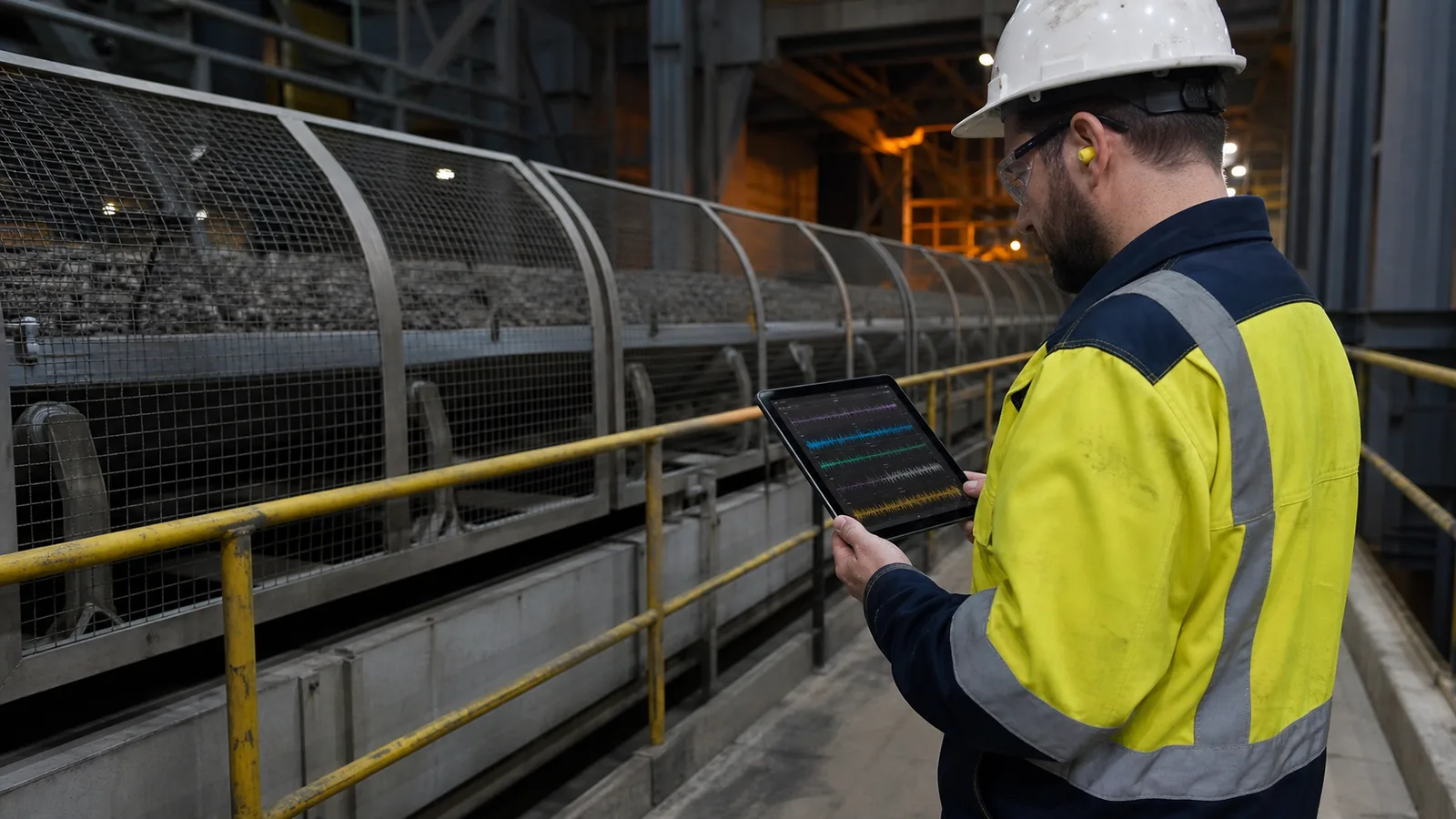
This practical guide examines conveyor predictive maintenance from an engineering, installation and lifecycle perspective.
Switch data becomes predictive when events are located, contextualized and linked to corrective work.
Key takeaways
- Trend pre-alarms.
- Combine data with inspection.
- Do not replace proof testing with dashboards.
Operating principle and purpose
Rising misalignment warnings may reveal a seizing idler; reduced speed margin can indicate slip; slow pull-rope tests can expose corrosion. These signals often precede failure.
Capture state changes, duration, load and operating context. Join events with findings and work orders, then compare with baseline while retaining proof tests.
Engineering workflow
Convert the application into written requirements before comparing products. A controlled workflow makes technical differences visible and prevents a familiar part number from being applied outside its limits. Include normal and abnormal operating states, who may be exposed, how quickly the condition develops and what the conveyor must do after detection. Mark field locations on a drawing so quotations, installation and later proof tests all refer to the same scope.
- Standardize tags.
- Store alarm, trip, reset and bypass.
- Add load and speed context.
- Review patterns by location.
- Verify maintenance changes trends.
Selection and design criteria
Absence of trips is not proof of health; a failed device may stay quiet. Preserve data quality through control changes.
- Misalignment event count.
- Speed margin.
- Rope test force.
- Proof-test response.
- Corrosion and buildup.
Common failure modes
Most field problems arise from a mismatch between the device, mechanical interface, environment or control logic. Investigate the whole sensing chain before changing settings. Review recent maintenance, process-rate changes, weather and event history, then compare the physical actuator state with the terminal signal and controller indication. A higher delay or wider trip point may silence the symptom while allowing damage or risk to grow.
- Alarms are suppressed.
- Tag history breaks.
- Bypass time is hidden.
- Dashboard replaces testing.
- Work order lacks cause.
Commissioning and lifecycle verification
Commission the physical device through to the final control action and record the baseline. Inspection frequency should reflect consequence, environment, duty and failure history. Any bypass or failed proof test requires controlled corrective action before normal service. The equipment record should contain the full model code, approved datasheet, mounting photograph, initial settings, normal contact state and cause-and-effect reference. After replacement or adjustment, repeat the relevant acceptance test and confirm that reset restores readiness without issuing an unintended start command.
- Record model, settings, mounting dimensions and terminal state.
- Test the field actuator, input indication, alarm or trip and reset sequence.
- Inspect sealing, cable entry, hardware, actuator freedom and contamination.
- Revalidate after mechanical, electrical, software or process changes.
Specification and verification record
For a repeatable conveyor predictive maintenance decision, retain the approved datasheet, model code, mounting or calibration values, wiring reference and observed functional-test result under the equipment tag. Related terminology such as conveyor condition monitoring, safety switch maintenance can describe adjacent search or purchasing language, but it must not be used to assume that devices with different functions are interchangeable.
- Record the normal state and the exact condition that creates alarm or trip.
- Photograph the final installation and nameplate before contamination reduces legibility.
- Link every setting change or replacement to an authorized work order.
- Repeat the relevant proof test after mechanical, electrical or software modification.
Frequently asked questions
Can switches support prediction?
Yes, when events combine with inspection and context.
What data is useful?
Time, location, duration, load, speed, state and action.
Does prediction replace proof tests?
No. Rarely used functions need physical verification.
How are nuisance trips used?
Treat them as evidence and correct the cause.
Engineering note: Always verify the selected switch, wiring method, stopping function and environmental rating against the manufacturer’s current datasheet, the machine risk assessment and the standards enforced at the installation location.