

Blog
Explosion-Proof Conveyor Switches: ATEX and IECEx Selection

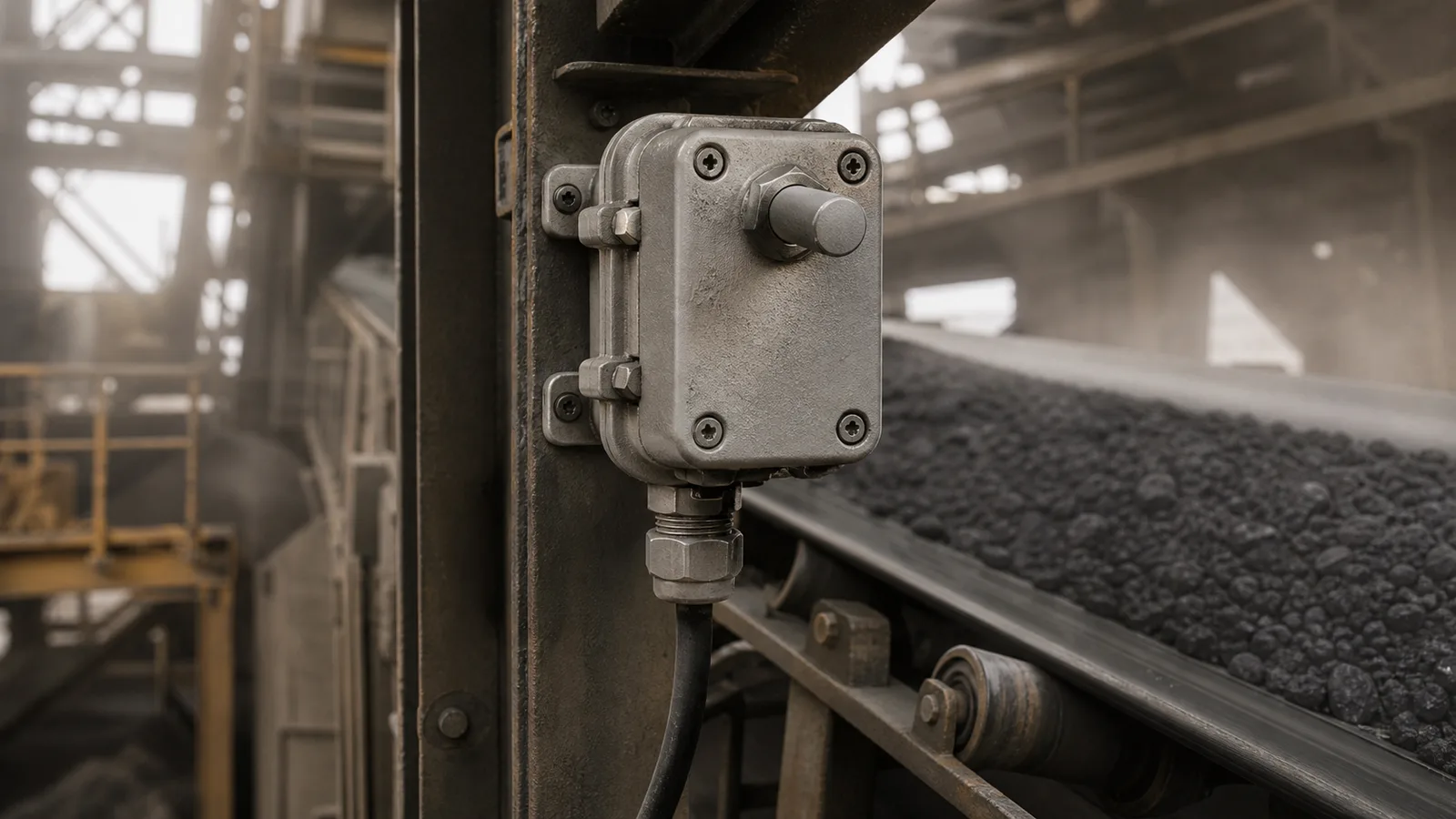
This practical guide examines explosion proof conveyor switch from an engineering, installation and lifecycle perspective.
A switch is suitable for a hazardous area only when its exact marking, certificate and installed cable-entry system match the classified location.
Key takeaways
- IP rating is not hazardous-area certification.
- Verify the complete model code and certificate—not a product-family brochure.
- Ambient temperature and dust-layer conditions can change allowable surface temperature.
What “EX” really means
Combustible gas, vapor or dust can ignite if electrical or mechanical equipment supplies sufficient energy or hot surface temperature. Hazardous-area equipment uses defined protection concepts and is assessed for particular zones or divisions, material groups and protection levels.
ATEX applies to equipment placed on the EU market and workplace use under related directives; IECEx is an international conformity system. Markings encode the equipment group, category or EPL, atmosphere, protection concept, gas or dust group, temperature and ambient limits. Local law determines which approvals are accepted.
Information required before selection
Obtain the formal hazardous-area classification and material data from qualified personnel. A vendor cannot infer the correct marking from “dusty conveyor” alone.
- Record zone or division and whether the hazard is gas, vapor or combustible dust.
- Identify gas subgroup or dust group and ignition or layer temperature data.
- Define equipment protection level, ambient range and required enclosure performance.
- List switch function, contacts, control voltage, cable entries and mechanical actuator.
- Review certificate schedule, special conditions of use and approved accessories.
Reading beyond the headline certification
A family may include certified and non-certified variants, different temperature classes and different contact arrangements. Suffixes can change the enclosure, gland thread or approval. The certificate number, “X” conditions and label on the delivered unit must all agree with the project document.
- Zone/category or equipment protection level.
- Protection concept such as flameproof or protection by enclosure for dust.
- Gas group or dust group.
- Temperature class or maximum surface temperature.
- Ambient range, enclosure rating and compatible certified glands or stopping plugs.
Hazardous-area mistakes
Many nonconformities occur after purchase, when a correct enclosure is installed with the wrong gland, modified, opened under unsafe conditions or poorly maintained.
- Treating IP66 or IP67 as proof of explosion protection.
- Using a reducer or blanking plug not permitted by the certificate.
- Painting over labels, earthing points or flamepaths.
- Mixing parts between models or drilling an additional cable entry.
- Ignoring dust buildup and the maximum permitted surface-temperature basis.
Installation, inspection and records
Use trained hazardous-area personnel and the applicable installation standard. Preserve threads, seals, earthing and flamepaths. The equipment register should link tag number, location, model, serial number, marking, certificate and inspection history.
- Compare the delivered nameplate with the approved datasheet.
- Verify gland and cable compatibility before termination.
- Inspect for corrosion, loose fasteners, seal damage and unauthorized modification.
- Update the dossier after replacement or repair.
Specification and verification record
For a repeatable explosion proof conveyor switch decision, retain the approved datasheet, model code, mounting or calibration values, wiring reference and observed functional-test result under the equipment tag. Related terminology such as ATEX conveyor switch, IECEx belt switch, hazardous area conveyor safety can describe adjacent search or purchasing language, but it must not be used to assume that devices with different functions are interchangeable.
- Record the normal state and the exact condition that creates alarm or trip.
- Photograph the final installation and nameplate before contamination reduces legibility.
- Link every setting change or replacement to an authorized work order.
- Repeat the relevant proof test after mechanical, electrical or software modification.
Frequently asked questions
Is an IP67 switch explosion proof?
No. IP67 addresses dust and water ingress; hazardous-area suitability requires the relevant certification and marking.
What does an X after a certificate number mean?
It indicates special conditions of use that must be read and followed for compliant installation.
Can an ATEX switch be used in every IECEx location?
Not automatically. Acceptance depends on local law, project requirements and the exact certification.
Why does ambient temperature matter?
Certified temperature marking and component limits apply only within the stated ambient range.
Engineering note: Always verify the selected switch, wiring method, stopping function and environmental rating against the manufacturer’s current datasheet, the machine risk assessment and the standards enforced at the installation location.