

Blog
How to Select a Belt Misalignment Switch

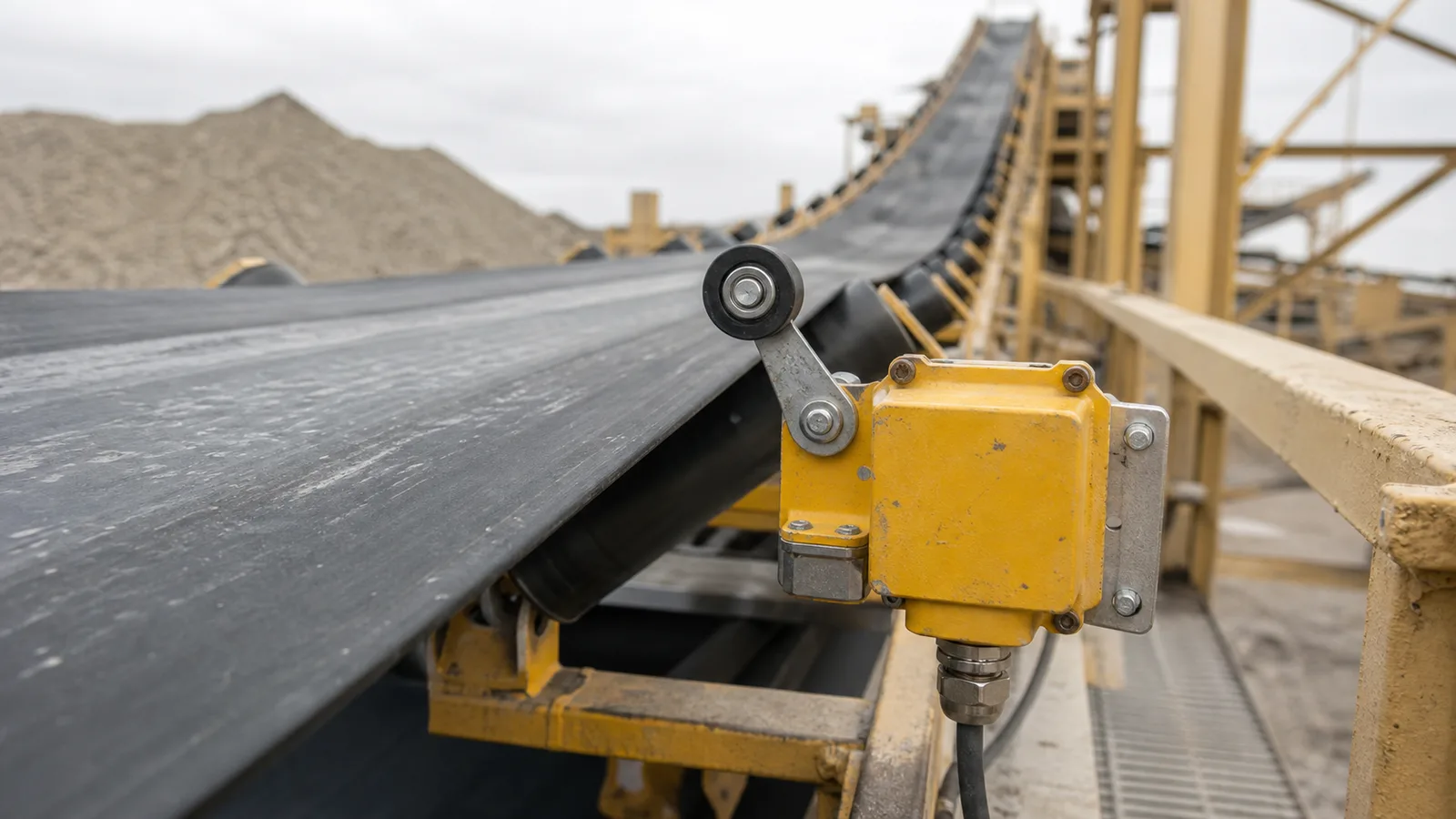
This practical guide examines belt misalignment switch from an engineering, installation and lifecycle perspective.
The right belt misalignment switch must detect damaging drift early without becoming a permanent guide roller or a source of nuisance trips.
Key takeaways
- Define alarm and trip points from allowable belt movement and stopping distance.
- Match the roller and housing to speed, abrasion, corrosion, dust and impact.
- Verify contacts, reset and certifications on the exact model code.
What the switch must accomplish
A drifting belt can spill material, cut its edge, damage structure and create heat through rubbing. The switch converts contact between the moving belt edge and a roller lever into a repeatable electrical signal before that contact becomes destructive.
Single-stage models provide one switching point. Two-stage models can send an early warning at modest lever deflection and a final trip at a larger angle. Adjustable cams offer flexibility, while fixed stages simplify setup. The best choice depends on permitted belt travel and how quickly the conveyor can stop.
Define the application before choosing a model
A useful specification describes the conveyor and environment rather than copying a generic switch name.
- Record belt speed, width, normal edge movement and maximum safe deviation.
- Identify head, tail, loading, curve and return-run locations that need monitoring.
- Define whether one or two stages, latching and local indication are required.
- List control voltage, contact utilization, cable entry and earthing requirements.
- Classify dust, water, corrosion, temperature and hazardous-area exposure.
Mechanical and electrical selection points
A large ball-bearing roller can reduce friction and wear when briefly contacted by a fast belt. The lever must tolerate the possible direction and magnitude of deflection without transferring damaging force to the housing. Internally, positive-opening contacts and suitable utilization categories matter more than a headline ampere figure.
- Roller diameter, bearing construction and material.
- Permitted actuation angle, overtravel and mechanical stop.
- Pre-alarm and trip contact count and adjustability.
- Automatic return versus mechanical latching and local reset.
- IP rating, corrosion protection, temperature and exact ATEX/IECEx/other approval where required.
Selection and placement mistakes
Many nuisance alarms blamed on the product come from incorrect location or clearance. The switch should monitor an established belt path, not compensate for a conveyor that was never tracked correctly.
- Selecting by enclosure appearance without checking the full model code.
- Mounting only one side where drift can occur in both directions.
- Placing the roller too close so normal belt wander causes constant contact.
- Placing it too far away to protect the edge before structure contact.
- Ignoring conveyed material that can bury or impact the actuator.
Acceptance testing and maintenance
After the belt has been tracked, set and document roller position. Deflect the roller with the approved method and confirm each stage at the field terminals, controller and final alarm or trip. During inspections, look for free roller rotation, bent arms, loose brackets, buildup and evidence of continuous belt contact.
- Measure and record clearance on both sides.
- Confirm alarm and trip indications are correctly labeled.
- Check that the belt stops before damaging edge contact.
- Investigate every recurring operation instead of increasing the trip angle.
Specification and verification record
For a repeatable belt misalignment switch decision, retain the approved datasheet, model code, mounting or calibration values, wiring reference and observed functional-test result under the equipment tag. Related terminology such as belt alignment switch, belt sway switch selection, run off switch can describe adjacent search or purchasing language, but it must not be used to assume that devices with different functions are interchangeable.
- Record the normal state and the exact condition that creates alarm or trip.
- Photograph the final installation and nameplate before contamination reduces legibility.
- Link every setting change or replacement to an authorized work order.
- Repeat the relevant proof test after mechanical, electrical or software modification.
Frequently asked questions
Are belt sway, run off and misalignment switches the same?
The terms commonly describe the same protective function, though individual product features and regional terminology vary.
Should the switch touch the belt during normal operation?
Normally no. It is set with manufacturer-specified clearance to respond to abnormal lateral movement.
Why use a two-stage switch?
It provides an early alarm for intervention and a later trip if deviation continues.
Do all misalignment switches suit explosive dust?
No. Only exact models carrying the required hazardous-area certification and marking may be used in the classified location.
Engineering note: Always verify the selected switch, wiring method, stopping function and environmental rating against the manufacturer’s current datasheet, the machine risk assessment and the standards enforced at the installation location.